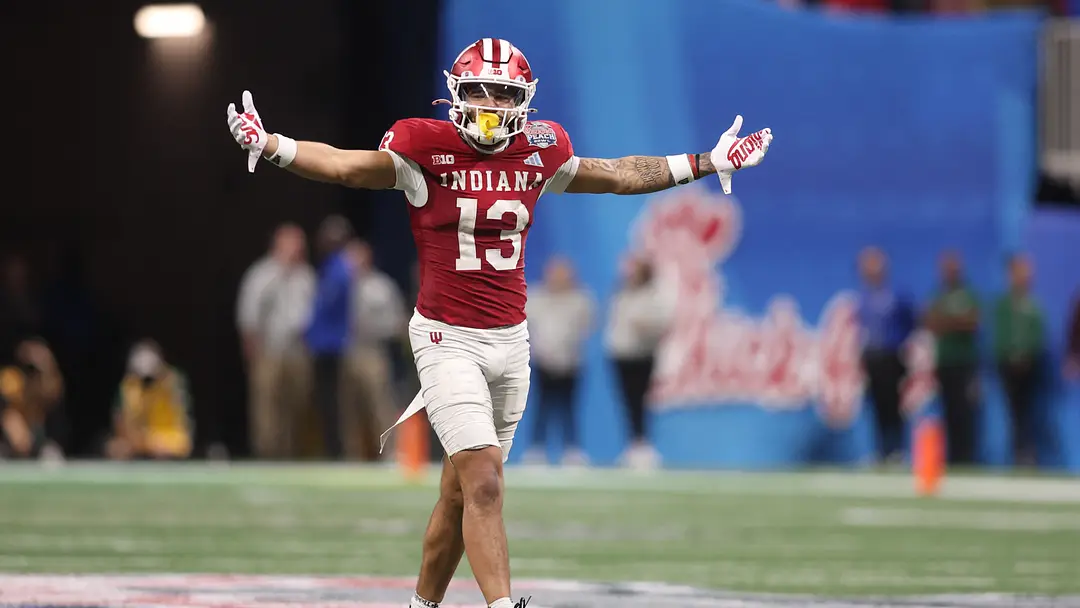
Indiana’s celebration over a significant NCAA eligibility victory has been tempered by a question that could carry major consequences for the Hoosiers’ 2026 season: whether defensive standouts Kellan Wyatt and Stephen Daley will ultimately be permitted to remain on the field.
The uncertainty centers on the rapidly changing legal and administrative landscape surrounding NCAA eligibility, particularly as court rulings and waiver decisions continue to challenge the traditional limits on athletes’ playing careers. For Indiana, the issue is not merely procedural. Wyatt and Daley are projected to be central pieces of a defense expected to carry championship-level expectations into the new season.
The reversal was swift. Just weeks after Indiana edge rushers Kellan Wyatt and Stephen Daley appeared to have secured another season of college football, a federal appellate ruling put both players back in limbo — and left one of the Big Ten’s most important defensive fronts waiting for an answer.
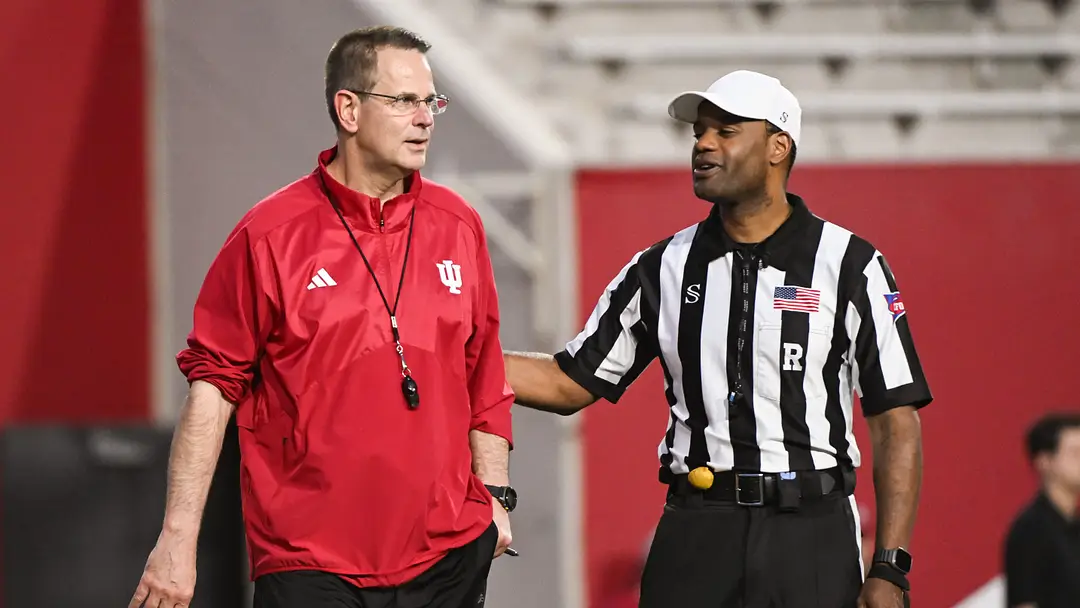
The U.S. Court of Appeals for the 10th Circuit granted the NCAA’s request to stay a lower-court injunction that had temporarily opened the door for athletes from the high school Class of 2022 to compete in a fifth collegiate season. The Aug. 21 decision means Wyatt and Daley are currently ineligible to play in games while the appeal proceeds, although Indiana coach Curt Cignetti confirmed Monday that both players remain with the program and are practicing.
For Indiana, the development is more than a legal footnote.
Wyatt and Daley were expected to strengthen a defensive front that has been built around disruption, depth and the ability to generate pressure without consistently sacrificing numbers in coverage. Their uncertain status forces Indiana to prepare for the 2026 season without knowing whether two experienced edge defenders will be available when the Hoosiers need them most.
The case, Wisne v. NCAA, has become one of the clearest examples yet of the instability surrounding college athletics in the post-transfer-portal, NIL and antitrust-litigation era. The plaintiffs challenged the NCAA’s implementation of a new five-season eligibility framework, arguing that athletes from the Class of 2022 were unfairly excluded while future classes would benefit from the revised structure. A federal judge in Colorado initially granted relief, finding sufficient grounds for a temporary restraining order and later preliminary relief.
That ruling created an immediate opportunity for athletes whose traditional eligibility had expired.
Indiana was among the programs positioned to benefit.
Daley returned to Bloomington after the court action gave him a potential path back onto the field. Wyatt followed, announcing his return after spending the previous season with the Hoosiers. Indiana suddenly had the prospect of adding two veteran defenders to a roster already carrying enormous expectations after the program’s recent rise under Cignetti.
Wyatt’s case was particularly significant because of what he could provide at the line of scrimmage.
Before arriving at Indiana, Wyatt spent three seasons at Maryland, where he recorded 80 tackles and 8.5 sacks. His first season with the Hoosiers was interrupted by a knee injury that ended his year after seven games, but he had been productive before the setback and had recorded eight tackles for loss, according to Indiana public radio station WFIU.
That production matters because Indiana’s defensive system is designed to create negative plays without becoming predictable. Modern defenses cannot simply send pressure on obvious passing downs and expect to survive against quarterbacks capable of identifying overloaded fronts before the snap. The premium is increasingly on edge defenders who can win individual matchups, compress the pocket and affect the quarterback while allowing the defense to maintain numbers in coverage.
Wyatt has shown that type of disruptive potential.
Daley represents another experienced option capable of expanding Indiana’s rotational flexibility. The possibility of pairing the two on the edge would have allowed the Hoosiers to manage snap counts, vary personnel groupings and maintain fresh rushers during the fourth quarter.
Instead, Indiana is operating with uncertainty at precisely the point in the calendar when coaching staffs typically transition from experimentation to preparation.
Cignetti confirmed that both players continue to practice, a critical distinction. They have not disappeared from the program or been removed from football activity. But game eligibility is the issue that matters most, and until the appellate process provides clarity, Indiana must construct contingency plans that assume neither player will be available on Saturdays.
That creates a difficult balancing act.
Indiana cannot afford to devote its entire defensive installation around players who may not be cleared. At the same time, the Hoosiers would be foolish to completely remove two experienced pass rushers from their plans if a later legal decision restores their eligibility.
The result is a roster-management problem with no traditional football solution.
Cignetti and his staff must prepare replacement players for meaningful snaps while also keeping Daley and Wyatt physically and mentally engaged. Every practice rep becomes part of a calculation. Coaches must develop the players currently expected to play while preserving the possibility that the roster could suddenly become stronger later in the season.
The uncertainty also extends beyond Bloomington.
The 10th Circuit’s decision represented a significant short-term victory for the NCAA, but it did not settle the broader argument over eligibility. The appellate court stayed the lower-court relief while the underlying case continues, and legal challenges in other jurisdictions have produced different outcomes for other athletes. The result is a patchwork system in which similarly situated players may face different eligibility outcomes depending on the case and jurisdiction involved.
That inconsistency is at the heart of the NCAA’s current problem.
College football has traditionally relied on standardized eligibility rules to create predictable roster construction. Coaches recruit years in advance, scholarship budgets are planned around anticipated departures, and depth charts are built with eligibility expiration dates in mind.
Those assumptions have become increasingly unstable.
The transfer portal first changed the way programs managed roster turnover. NIL then transformed the financial marketplace surrounding player retention and acquisition. Now eligibility litigation is creating another variable: a player who appears to have exhausted his eligibility may suddenly receive a legal path to return.
For a program such as Indiana, that uncertainty can affect everything from scholarship allocation to recruiting strategy.
If Wyatt and Daley ultimately regain eligibility, the Hoosiers would receive a late reinforcement at one of the sport’s most valuable positions. Elite edge rushers can alter offensive game plans, forcing coordinators to keep tight ends and running backs in protection, shortening route concepts and limiting the number of receivers released into patterns.
If they do not, Indiana loses two players it had recently expected to have available.
The financial implications differ from those of the NFL, where contracts and salary-cap accounting dominate roster decisions. College football has no leaguewide salary cap, but roster management now has its own economic pressures. NIL commitments, scholarship limitations and revenue-sharing structures require athletic departments to make increasingly precise personnel calculations. An unexpected eligibility change can affect the number of roster spots available and the resources committed to incoming or returning players.
That is why the current litigation reaches far beyond the individual athletes involved.
For Daley and Wyatt, the stakes are immediate and personal. A fifth season would provide additional game film, another opportunity to develop physically and technically, and potentially another year to improve their professional evaluation. Edge defenders are judged heavily on traits that translate directly to the next level: first-step explosiveness, bend, length, hand usage, run-defense discipline and the ability to finish pressures with sacks.
An additional season could materially affect each player’s NFL outlook.
There is also a broader irony in the timing. The NCAA’s legal victory has not produced the stability traditionally associated with a clear eligibility rule. Instead, it has created a temporary period in which players across multiple sports are awaiting court decisions while programs prepare for competition.
The NCAA has argued that its eligibility framework is necessary to prevent the kind of roster disruption that unrestricted retroactive eligibility could create. The original Colorado court proceedings themselves addressed concerns that expanding the new rule retroactively could create significant disruption for member schools.
But for Indiana, the disruption is already here.
The Hoosiers now face the opening stretch of the season with two defenders practicing but unable to play unless the legal landscape changes. The coaching staff’s challenge is to prevent uncertainty from becoming distraction.
Cignetti’s approach will likely be familiar to anyone who has followed his program’s rise: prepare the players available, establish the rotation, and refuse to allow circumstances outside the building to dictate the team’s daily standard.
Still, there is no escaping the significance of the decision.
Indiana is trying to sustain success in an increasingly unforgiving Big Ten, where depth along the defensive line can determine whether a defense survives the physical demands of a long season. The difference between having two additional veteran edge defenders and losing them entirely could affect third-down efficiency, red-zone pressure packages and the ability to rotate bodies against the conference’s best offensive lines.
For now, Daley and Wyatt remain in football’s version of legal purgatory — active participants in practice, absent from the game-day roster and waiting for a court decision that could reshape their final chapter in college football.
The NCAA won this round.
Indiana, however, is still waiting to learn what that victory will ultimately cost.