New NCAA Football Rules for 2026 and What They Mean for Indiana
The defending national champions will enter the 2026 season with a target on their backs — and with a college football rulebook that has changed in several meaningful ways.
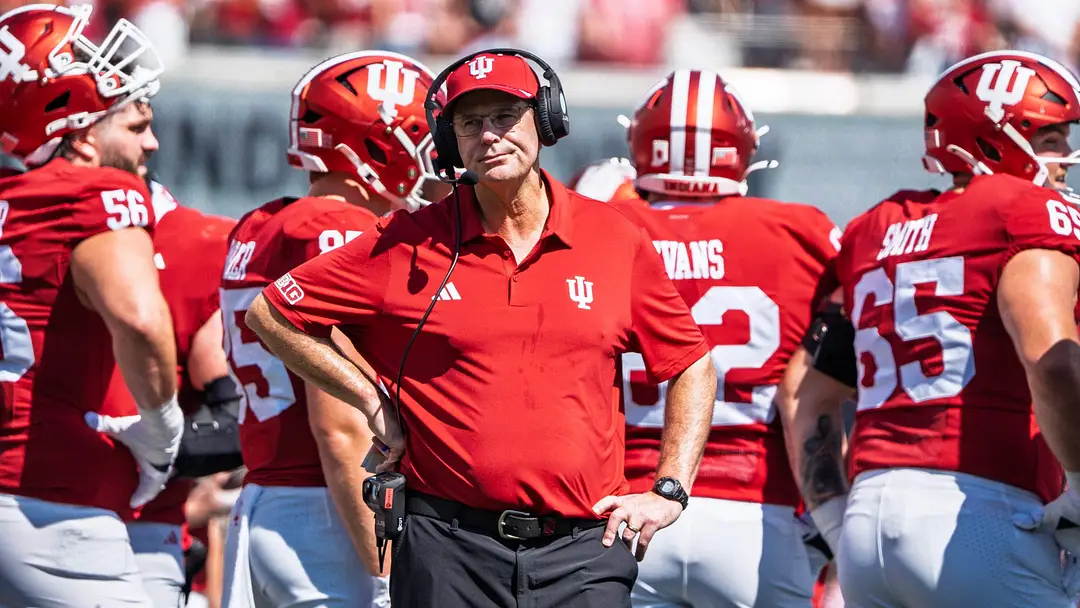
For Indiana, the most consequential developments are not simply cosmetic adjustments to the way games are officiated. The NCAA’s evolving rules on targeting, roster management, transfers and athlete compensation are reshaping the competitive environment in which Curt Cignetti’s Hoosiers will attempt to defend the first national championship in program history.
Indiana’s 2025 season was historic. The Hoosiers went 16-0, won the Big Ten championship and defeated Miami 27-21 in the College Football Playoff National Championship Game. They finished third nationally in scoring offense at 41.6 points per game and second in scoring defense at 11.7 points allowed per game.
Now the challenge is different. Cignetti must maintain that standard while navigating a roster constructed under the NCAA’s new post-House-settlement framework.
One of the most visible 2026 rule changes concerns targeting.
The NCAA approved a one-year trial that substantially changes the punishment structure for targeting in Division I football. Under the new system, a player disqualified for a first targeting offense during the season — regardless of whether it occurs in the first or second half — will be eligible to play in the following game.
A second targeting disqualification will result in the player missing the first half of the next game, while a third offense will require the player to sit out the entire following game. Conferences also have the option of establishing an appeals process following a player’s second targeting offense.
For Indiana, that could have strategic significance.
Cignetti’s defense is built around physicality, pressure and disciplined pursuit. The Hoosiers’ multiple 4-2-5 structure places considerable responsibility on safeties and linebackers to diagnose formations quickly, close space and deliver tackles in open-field situations. A targeting call can dramatically alter a game, particularly when it removes an important defensive player.
The new rule does not make targeting less serious. Rather, it changes the cost of the first violation. Indiana’s defensive staff can now prepare for the possibility that a player ejected for a first targeting infraction will be available the following week, rather than automatically losing him for the opening half.
That distinction becomes particularly important in the Big Ten, where one suspension can affect the outcome of a conference game and potentially the College Football Playoff résumé.
But the rule change also creates a new coaching challenge. Defenders cannot interpret the reduced first-offense penalty as permission to play recklessly. Two targeting offenses carry substantially greater consequences, and a third can remove a player for an entire game.
The NCAA’s broader transfer rules also became more significant in 2026.
In April, the Division I Cabinet adopted penalties designed to prevent what the NCAA calls “ghost transfers” — situations in which schools sign, roster, allow to practice or play a transfer athlete before that athlete has entered the NCAA Transfer Portal.
The automatic penalties are severe: a head coach can be suspended for 50% of the season and the program can be fined 20% of that sport’s annual budget. The policy applies to transfers across Division I and took effect for transfers occurring on or after Feb. 1, 2026.
That matters enormously to Indiana because the Hoosiers have embraced roster construction through the transfer portal.
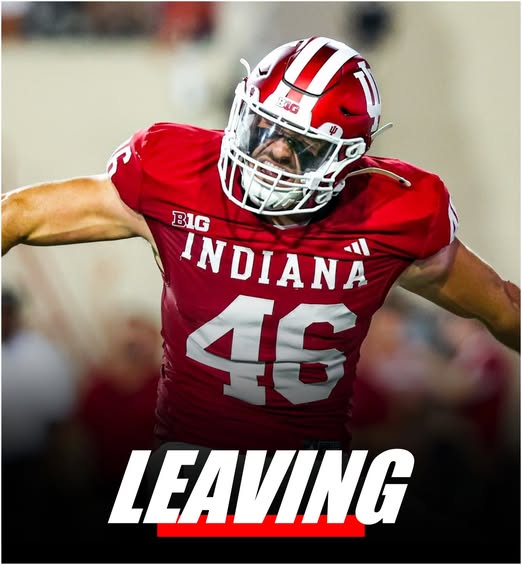
Indiana’s official 2026 preseason roster lists 60 returning players, including 11 who made multiple starts during the 2025 season. The roster also contains 44 newcomers, including 18 transfers. Nine of those transfers are defensive players, six are offensive players and three are specialists.
In other words, Indiana is precisely the kind of program for which transfer compliance is not an administrative footnote. It is central to roster building.
The new rules place greater importance on documentation, timing and communication between personnel departments, coaches and compliance staffs. In a transfer market where decisions can move rapidly, Indiana cannot afford an informal arrangement that later becomes an eligibility or compliance problem.
The roster structure itself represents another major change.
Under the NCAA’s implementation of the House v. NCAA settlement, football programs that operate under the new framework face a 105-player roster limit, while scholarship restrictions were fundamentally altered. Schools can provide scholarships to every athlete on their declared roster rather than being constrained by the previous sport-specific scholarship maximums.
For Indiana, that creates a different form of roster management.
The old scholarship-counting model rewarded programs for squeezing maximum value from a limited number of scholarships. The new environment places greater emphasis on the composition of a 105-player roster and the allocation of financial resources among those players.
That means every roster decision carries a football and financial component.
A veteran reserve who provides special-teams value, for example, must be evaluated against a younger developmental player. A transfer addition must be considered not only for his projected production but also for how he fits within the team’s available roster and compensation structure.
Indiana’s ability to develop players therefore becomes even more important.
The Hoosiers have already demonstrated an unusual ability to combine experienced transfers with returning contributors. The 2026 roster includes quarterback Josh Hoover, who has emerged as the focal point of the offense after Indiana’s historic 2025 season, while the receiving corps includes Michigan State transfer Nick Marsh and Tulane transfer Shazz Preston.
The quarterback position illustrates the broader problem.
Indiana currently has a competition behind Hoover involving Grant Wilson and redshirt freshman Tyler Cherry. Cherry’s development is particularly important because Indiana’s long-term roster sustainability cannot depend exclusively on importing another quarterback every offseason.
That is the new reality of college football.
The portal remains a powerful tool, but the NCAA’s evolving rules make roster planning more deliberate. Programs have fewer opportunities to operate informally, fewer roster spots to waste and greater financial responsibility attached to personnel decisions.
The changes arrive at an especially important moment for Indiana.
Cignetti has transformed a program that went 3-9 in 2023 into the reigning national champion. Indiana’s 2025 defense allowed only 266 yards per game, while the offense averaged 452 yards. The combination of explosive offense and elite defensive efficiency made the Hoosiers one of the most complete teams in the country.
But defending a championship is fundamentally different from winning one.
Every opponent now approaches Indiana with a different level of urgency. The Hoosiers are no longer an intriguing underdog story. They are the standard.
The 2026 schedule begins Sept. 5 against North Texas at Memorial Stadium, giving Indiana an opportunity to establish its new identity before entering another demanding Big Ten campaign.
The conference implications are significant. Indiana’s championship run demonstrated that the Big Ten’s hierarchy is no longer limited to the traditional powers. The Hoosiers defeated Ohio State 13-10 in the Big Ten Championship Game before dismantling Alabama and Oregon in the College Football Playoff.
The 2026 rules will not determine whether Indiana repeats.
But they will influence the margins.
Targeting penalties could affect defensive availability. Transfer regulations could determine how quickly programs can react to roster needs. The 105-player limit will force harder personnel decisions. The House-settlement framework will make financial planning inseparable from roster construction.
For a program trying to remain at the top of the sport, those margins matter.
Cignetti has already proved that Indiana can build a championship team. The next test is proving that the Hoosiers can sustain one while the rules of college football continue to change around them.
That may ultimately be the defining challenge of 2026: not simply defending a national title, but demonstrating that Indiana’s breakthrough was the beginning of a new era rather than the peak of an extraordinary one.