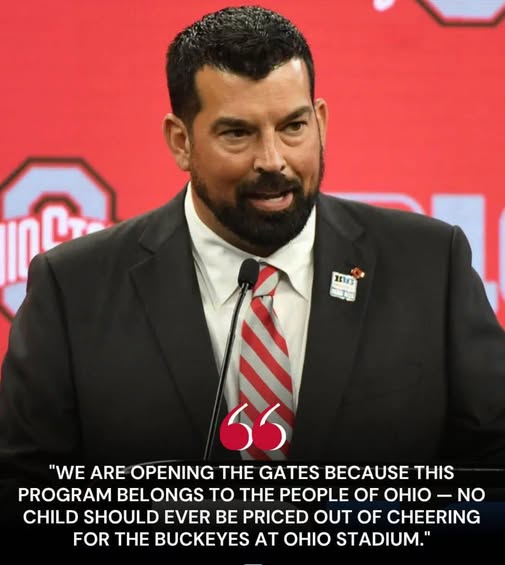
Ohio State Buckeyes football and head coach Ryan Day have delivered a jolt of optimism that is resonating far beyond Ohio Stadium. The program’s announcement of a $5 Ticket Day is more than a promotional initiative—it is a statement about access, identity, and the enduring bond between a powerhouse program and its community.
For decades, college football has thrived on pageantry and passion, but it has also become increasingly commercialized. Ticket prices at elite programs routinely stretch into ranges that make attendance a luxury rather than a tradition. Against that backdrop, Ohio State’s decision to open the gates of “The Shoe” for just five dollars represents a deliberate pivot toward inclusivity. It is a move that acknowledges a simple truth: the heartbeat of college football lies not in premium seating or corporate boxes, but in the collective roar of everyday fans.
The significance of this initiative cannot be overstated. NCAA Division I Football Bowl Subdivision programs operate in a high-stakes ecosystem driven by television contracts, sponsorship deals, and ever-expanding budgets. Within that landscape, affordability is rarely the priority. Yet Ohio State, one of the sport’s most recognizable brands, is choosing to lean into accessibility. The message is clear—game day should not be reserved for those who can afford it; it should be shared with those who live and breathe the program from afar but seldom have the means to be present.
For many families, particularly those from lower-income backgrounds, attending a college football game is often out of reach. The cost of tickets, parking, concessions, and travel quickly adds up, turning what should be a communal experience into a financial burden. By slashing ticket prices to a symbolic $5, Ohio State is removing one of the most significant barriers to entry. The initiative invites new faces into a historic venue, offering them a chance to create memories that might otherwise remain out of grasp.
There is also a deeper emotional resonance to this decision. College football is built on tradition—on the rituals that connect generations of fans. At Ohio State, those traditions are woven into every corner of Ohio Stadium, from the pregame pageantry to the thunderous chants that echo across the stands. For first-time attendees, stepping into that environment can be transformative. It is not merely about watching a game; it is about becoming part of something larger, a shared identity that transcends individual circumstances.
Ryan Day’s role in championing this initiative underscores his understanding of the program’s cultural significance. Since taking over as head coach, Day has consistently emphasized the importance of representing more than just wins and losses. His leadership reflects a broader vision—one that recognizes the responsibility of a flagship program to serve its community. By backing the $5 Ticket Day, Day is reinforcing the idea that success is not only measured on the scoreboard but also in the impact a program has beyond it.
The timing of the announcement adds another layer of intrigue. College football is entering a period of rapid transformation, with changes in player compensation, conference realignment, and media rights reshaping the sport’s landscape. Amid these shifts, there is growing concern that the connection between teams and their local communities could weaken. Initiatives like this serve as a counterbalance, reaffirming the foundational role of fans in sustaining the sport’s vitality.
The response from the college football world has been swift and overwhelmingly positive. Fans, analysts, and even rival supporters have praised Ohio State for taking a step that prioritizes people over profit. In a sport often criticized for its commercialization, the Buckeyes’ decision stands out as a reminder that empathy and innovation can coexist with competitiveness. It challenges other programs to rethink their own approaches to fan engagement and accessibility.
From a strategic perspective, the initiative could have long-term benefits that extend beyond immediate goodwill. Introducing new fans to the game day experience has the potential to cultivate lifelong supporters. A child attending their first game at Ohio Stadium through this program may grow up to become a dedicated follower, attending games regularly and passing that passion down to future generations. In that sense, the $5 Ticket Day is not just an act of generosity—it is an investment in the program’s future.
The atmosphere inside Ohio Stadium is often described as one of the most electrifying in sports. With a capacity exceeding 100,000, “The Shoe” becomes a sea of scarlet and gray on game days, pulsating with energy. By opening its doors to a broader audience, Ohio State is amplifying that energy, enriching the experience for everyone in attendance. A more diverse crowd brings new voices, new stories, and a deeper sense of community, enhancing the very essence of what makes college football special.
Critics might argue that such initiatives are symbolic gestures rather than sustainable solutions to the broader issue of rising costs in sports. However, symbolism matters. It sets a precedent and sparks conversations that can lead to meaningful change. When a program of Ohio State’s stature takes a stand, it carries weight. It signals to the rest of the sport that accessibility is not an afterthought but a priority worth pursuing.
Moreover, the financial implications for Ohio State are unlikely to be detrimental. The program’s revenue streams are robust, supported by lucrative media deals and a massive fan base. Allocating a portion of tickets at a reduced price is a manageable adjustment, particularly when weighed against the positive public relations impact and the strengthening of community ties. In many ways, it is a calculated decision that aligns ethical considerations with strategic interests.
The initiative also highlights the evolving role of college athletics as a platform for social good. Beyond entertainment, programs have the capacity to influence communities and address disparities. By making games more accessible, Ohio State is contributing to a broader effort to democratize sports experiences. It is a reminder that the power of athletics extends beyond the field, offering opportunities to bring people together in meaningful ways.
For the players, the presence of a more diverse and inclusive crowd can be equally impactful. Athletes often speak about the adrenaline rush of performing in front of a packed stadium. Knowing that their performance is being witnessed by fans who might not otherwise have the chance to attend adds an extra layer of motivation. It reinforces the idea that they are not just প্রতিনিধing a university but inspiring individuals who see themselves reflected in the stands.
There is also a cultural dimension to consider. College football Saturdays are woven into the fabric of American life, particularly in regions where the sport serves as a focal point for community identity. By lowering the barrier to entry, Ohio State is ensuring that this cultural tradition remains accessible to all. It is an acknowledgment that the essence of the sport lies in its inclusivity, in the ability of people from different backgrounds to come together and share in a collective experience.
The ripple effects of this decision could extend beyond Ohio State. Other programs may feel compelled to explore similar initiatives, whether through discounted tickets, community outreach programs, or partnerships aimed at increasing accessibility. In that sense, the Buckeyes are not just making a statement for themselves but potentially influencing the trajectory of the sport as a whole.
As the announcement continues to generate buzz, anticipation is building for what the $5 Ticket Day will look like in practice. The logistics of managing increased demand, ensuring fair distribution, and maintaining a high-quality game day experience will be critical. However, these challenges are a testament to the initiative’s appeal. They reflect a level of interest and enthusiasm that underscores the importance of making sports more accessible.
At its core, this initiative is about connection. It is about bridging the gap between a storied program and the community that supports it. It is about recognizing that the true value of sports lies not in revenue figures or rankings but in the moments that bring people together. Whether it is a family attending their first game, a lifelong fan returning to the stadium after years away, or a young child experiencing the magic of college football for the first time, the impact of this decision will be felt in countless personal stories.
In a time when the sports industry often faces criticism for prioritizing profit over people, Ohio State’s $5 Ticket Day offers a refreshing counter-narrative. It is a reminder that even at the highest levels of competition, there is room for compassion and community-focused thinking. The Buckeyes have not just opened their stadium; they have opened a door to possibility, inviting fans from all walks of life to step inside and be part of something extraordinary.
As kickoff approaches and the stands begin to fill, the true measure of this initiative will not be found in ticket sales or attendance figures, but in the experiences it creates. The cheers, the shared excitement, the sense of belonging—these are the elements that define college football. By making them accessible to a wider audience, Ohio State is reinforcing the very foundation of the sport.
In the end, the $5 Ticket Day is more than a headline—it is a statement of values. It reflects a commitment to inclusivity, a recognition of the importance of community, and a belief in the transformative power of sports. For Ohio State, it is an opportunity to lead by example, to show that greatness is not only about championships but also about the impact a program can have on the lives of its supporters.