Ryan Day Reveals Ohio State Took Action After Controversial Officiating in Narrow Indiana Victory
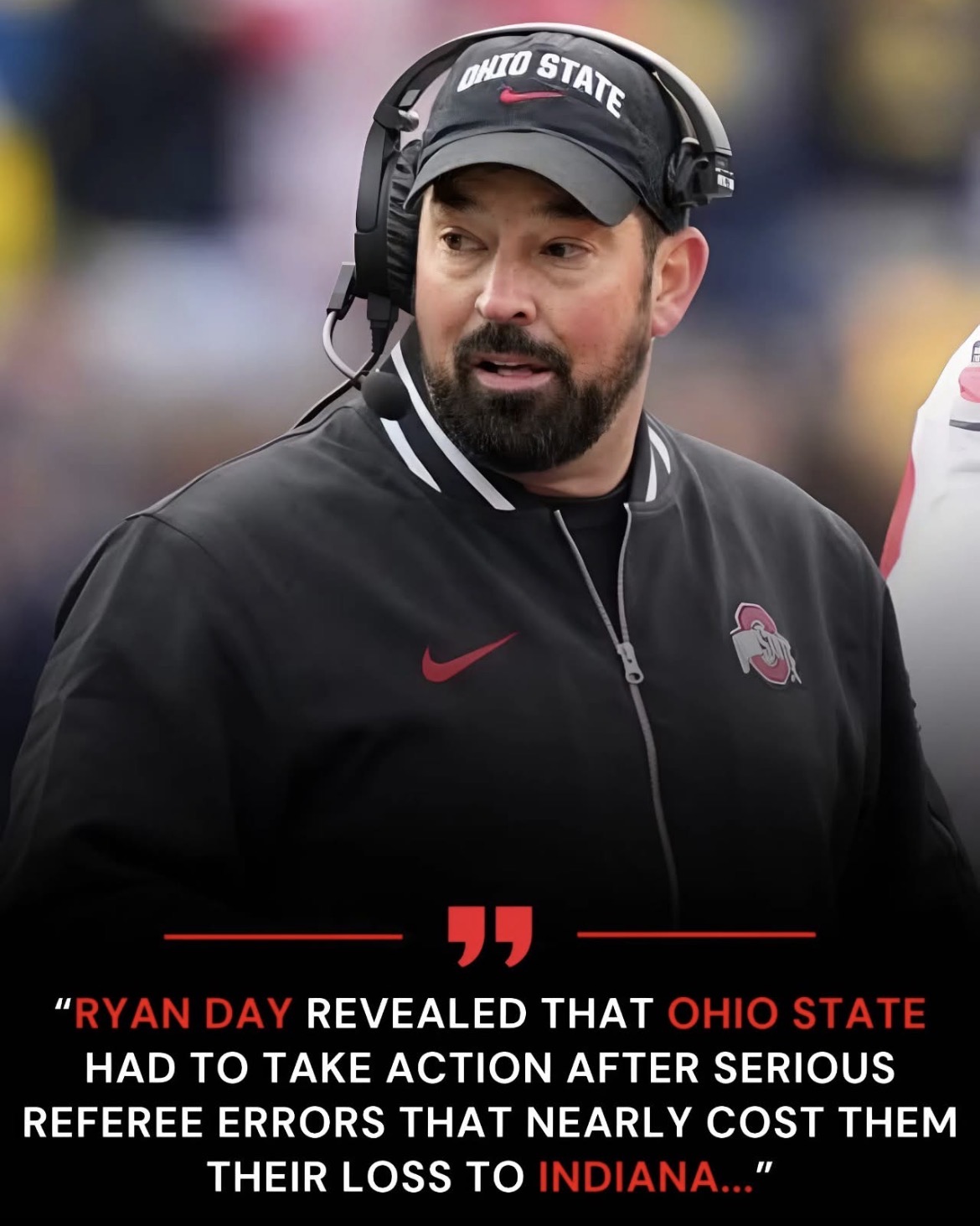
Ohio State head coach Ryan Day has revealed that the Buckeyes took their concerns about officiating directly to the Big Ten after their dramatic 19–15 victory over Indiana, raising fresh questions about several controversial decisions that shaped the top-five showdown.
The Buckeyes escaped Bloomington with a hard-fought win on October 17, 2026, ending Indiana’s 22-game winning streak. However, the result did little to quiet the debate surrounding the officiating, particularly after several plays involving Ohio State wide receiver Jeremiah Smith and Indiana quarterback Josh Hoover attracted significant attention.
According to reports published after the game, Day confirmed that Ohio State submitted multiple plays for review and received feedback from conference officials. He indicated that the team had raised more concerns than usual following a game in which several decisions could have influenced the outcome.
The controversy has become another major storyline surrounding a matchup that delivered plenty of drama, late-game tension and questions about how consistently the rules were applied.
Day Confirms Buckeyes Raised Their Concerns With the Big Ten
Day was careful when discussing the conversations between Ohio State and conference representatives, making it clear that he did not want to disclose confidential details of the review process.
Nevertheless, his comments suggested that the Buckeyes were determined to receive answers about the disputed calls.
Ohio State typically submits approximately 10 plays per week for officiating review. Following the Indiana game, the team submitted more plays than usual, according to Day’s remarks reported by Yahoo Sports.
Day also indicated that the review process involved feedback from officials and conference representatives, although he stopped short of revealing every detail of the discussions.
The additional submissions reflected the level of concern within the Ohio State program. Rather than allowing the debate to remain limited to postgame interviews and social media reactions, the Buckeyes sought clarification through the conference’s established review process.
For Day, the objective was to ensure that critical plays received proper attention and that the officiating crew’s decisions could be evaluated.
However, the situation also highlights a familiar challenge in college football: teams can request explanations and receive acknowledgments of mistakes, but those reviews cannot change the result of a game already decided on the field.
Jeremiah Smith’s Matchups Become a Major Talking Point
One of the biggest issues for Day involved the treatment of star wide receiver Jeremiah Smith.
The Ohio State standout entered the Indiana matchup as one of the most dangerous offensive weapons in college football. However, Indiana’s defensive approach made it difficult for the Buckeyes to consistently establish their passing attack.
Smith finished the contest with four receptions for 68 yards and one touchdown. His fourth-quarter score proved especially important, giving Ohio State a 19–7 advantage and putting the Buckeyes in position to secure the victory.
Despite that production, Day believed Smith had been subjected to contact that should have resulted in defensive pass interference penalties.
Day has previously argued that Smith’s size and strength can make illegal contact appear less obvious because the receiver is capable of fighting through physical coverage. His concern is that officials must judge the action itself rather than assume that a powerful receiver can simply overcome contact.
That distinction matters because defensive backs are permitted to challenge receivers within the rules, but they cannot illegally restrict a receiver’s opportunity to make a play on the football.
According to reporting after the game, Day indicated that officials had acknowledged mistakes involving Smith during the review process.
The reported acknowledgment added another layer to the discussion, particularly because Smith’s ability to influence games makes him a central part of Ohio State’s offensive strategy.
Still, a missed call does not automatically determine the outcome of a game. The broader question is whether officiating standards are being applied consistently to both teams in situations where every yard can matter.
The Controversial Roughing-the-Passer Penalty
Smith’s treatment was not the only officiating issue discussed after the game.
A fourth-quarter decision involving Ohio State defensive back Jermaine Mathews Jr. became another major talking point when Indiana was attempting to mount a comeback.
With the Hoosiers trailing 19–15, Mathews was penalized for roughing the passer after contact with Hoover. Officials reviewed the play and overturned the targeting ruling, but the roughing-the-passer penalty remained, giving Indiana 15 additional yards.
The decision extended Indiana’s drive and provided the home team with another opportunity to threaten Ohio State’s lead.
FOX analyst Joel Klatt questioned the call during the broadcast, while reactions from fans of both programs reflected the frustration that often follows controversial decisions in close games.
From Indiana’s perspective, the penalty helped keep alive a drive that could have produced a game-winning touchdown. For Ohio State, it represented another decision that intensified concerns about the consistency of the officiating.
However, the game also featured penalties against Indiana that benefited the Buckeyes. A roughing-the-passer call against Hoosiers linebacker Kellan Wyatt helped Ohio State advance into scoring position in the first half.
Ohio State finished with seven penalties for 50 yards, while Indiana was penalized four times for 42 yards. Those numbers alone do not establish whether the officiating favored either team, but they provide important context for evaluating the competing complaints.
How Ohio State Survived Indiana’s Late Comeback
Despite the controversy, Ohio State ultimately did enough to escape with the victory.
The Buckeyes entered the fourth quarter holding a 13–7 advantage before quarterback Julian Sayin connected with Smith for a 38-yard touchdown on fourth-and-1. The play increased Ohio State’s lead to 19–7, giving the visitors a much-needed cushion.
Indiana refused to surrender.
Hoover led a 75-yard touchdown drive that ended with a 19-yard scoring pass to Nick Marsh. The Hoosiers then converted a two-point attempt, cutting Ohio State’s advantage to 19–15 with time remaining.
The final minutes became increasingly tense as Indiana searched for one more breakthrough.
After Sayin left with a right-arm injury, Ohio State’s defense faced additional pressure to protect the lead. Hoover continued to push Indiana forward, and the Hoosiers eventually reached a decisive fourth-down situation.
Marsh appeared to have an opportunity to deliver the go-ahead touchdown, but his left foot landed out of bounds as he attempted to complete the catch.
The incompletion ended Indiana’s final serious scoring opportunity, allowing Ohio State to take possession and run out the clock.
Sayin’s injury added another concern for Day. The quarterback was expected to miss several weeks, according to postgame reporting, leaving Ohio State to prepare for its upcoming schedule without its regular starter.
What Happens Next for Ryan Day and Ohio State?
The officiating controversy arrives at a critical point in Ohio State’s season.
Day must address the quarterback situation, prepare his team for upcoming opponents and ensure that the Buckeyes learn from a performance that featured both important offensive moments and costly mistakes.
The review process may provide the program with greater clarity about the disputed decisions, but it cannot erase the uncertainty those calls created during the game.
For Indiana, the narrow defeat was equally frustrating. The Hoosiers had opportunities to win, mounted a late comeback and came within one completed pass of potentially taking the lead. Their inability to finish the final drive ultimately proved decisive.
For Ohio State, the victory remains significant, even as the discussion surrounding the officiating continues.
The bottom line: Day confirmed that Ohio State escalated its concerns through the Big Ten’s officiating review process after the Indiana game. Reports indicated that the conference acknowledged missed calls involving Smith, but the precise impact of those errors on the final result remains a matter of debate.
The Buckeyes secured the 19–15 win, yet the controversy has ensured that the game will be remembered for more than its final score.
As Ohio State moves forward without Sayin for several weeks, Day will need his team to focus on execution, discipline and preparation. The Buckeyes have already survived one of their toughest tests of the season. Their next challenge is proving they can maintain that momentum while the questions surrounding the Indiana game continue.