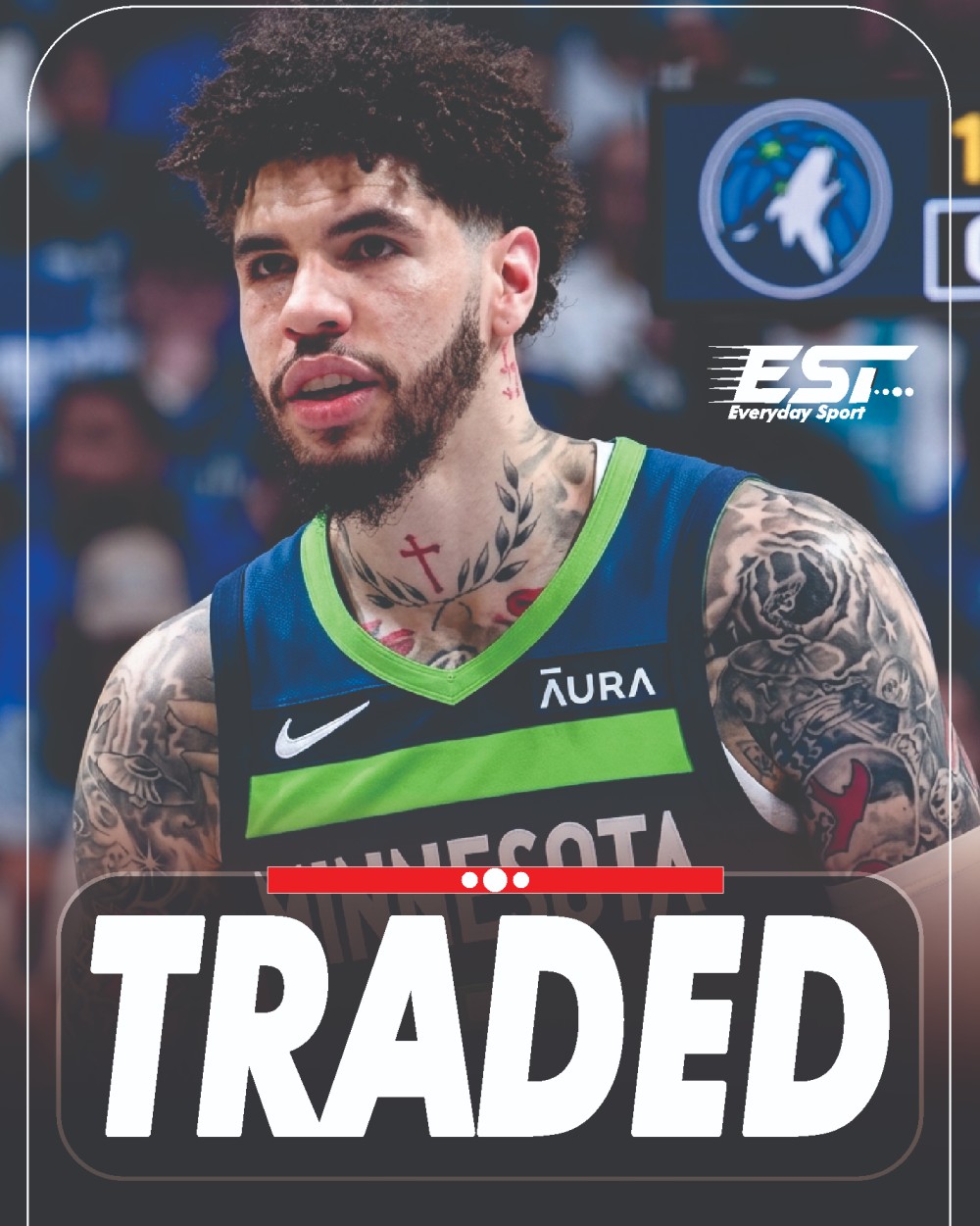
The Charlotte Hornets have agreed to trade franchise cornerstone LaMelo Ball and guard Josh Green to the Minnesota Timberwolves. In exchange, Charlotte receives versatile big man Naz Reid, an unprotected first-round pick in 2033, three first-round pick swaps (in 2028, 2029, and 2030), and three second-round selections.
This blockbuster deal, first reported Thursday evening, sends shockwaves through a league already buzzing with offseason intrigue. LaMelo Ball, the electric 24-year-old point guard who has been the face of the Hornets franchise since being selected third overall in the 2020 NBA Draft, is heading to the Twin Cities to join forces with rising superstar Anthony Edwards. For Minnesota, it’s a bold bid to elevate their championship contention window by adding a dynamic playmaker who can complement Edwards’ scoring prowess and inject creativity into an already stout defensive unit. For Charlotte, it’s a calculated pivot toward long-term flexibility, banking on future assets and a proven frontcourt presence in Reid to build around their remaining young core.
Ball’s departure marks the end of an era in Charlotte. The 6-foot-7 guard, known for his flashy passes, deep range, and infectious energy, arrived as a teenager fresh off a stint with the Illawarra Hawks in Australia and immediately transformed the Hornets’ fortunes. In his rookie season, he captured NBA Rookie of the Year honors, averaging 15.7 points, 6.1 rebounds, and 6.4 assists while flashing the kind of vision that evoked comparisons to some of the league’s all-time great facilitators. Over six seasons, Ball has evolved into a perennial All-Star threat, posting career averages of 20.8 points, 5.7 rebounds, and 7.3 assists per game. His 2025-26 campaign saw him deliver 20.1 points, 4.8 boards, and 7.1 dimes across 72 games, including a career-high 50-point explosion that etched his name deeper into Hornets lore alongside legends like Kemba Walker.
Yet Ball’s tenure was not without its challenges. Injuries have occasionally sidelined the guard, testing his durability in a position that demands relentless pace. The Hornets, despite flashes of promise with pieces like Miles Bridges, Brandon Miller, and recent draftees, have hovered around mediocrity, finishing the 2025-26 season at 44-38 and missing the playoffs in a competitive East. Team sources indicate internal frustrations with the lack of consistent winning, prompting ownership and front office leadership—led by figures committed to a sustainable rebuild—to explore a reset. Trading their marquee talent for a haul of picks and a solid contributor signals a willingness to prioritize asset accumulation over short-term contention.
On the other side, Minnesota views Ball as the missing piece. The Timberwolves have built a formidable roster around Edwards, the explosive 24-year-old who has blossomed into an MVP-caliber talent. Edwards, a four-time All-Star with All-NBA honors, averaged nearly 29 points per game in recent seasons and has led Minnesota to deep playoff runs, including Western Conference contention. Pairing him with Ball creates one of the most dynamic backcourts in the league—a pairing of two young stars who can score from all three levels, push the tempo, and create highlights that fill arenas. Edwards’ slashing ability and perimeter threat mesh perfectly with Ball’s court vision and step-back threes, potentially unlocking spacing that defenses will struggle to contain.
Naz Reid, the 26-year-old center/forward departing Minnesota, brings immediate value to Charlotte. A former undrafted gem out of LSU who developed into a Sixth Man of the Year candidate, Reid has been a model of consistency and versatility. Standing at 6-foot-9 and 264 pounds, he provides scoring punch off the bench or in the starting five, averaging 13.6 points, 6.2 rebounds, and 2.2 assists in the 2025-26 season while shooting 45.6% from the field and 36.2% from three. His ability to stretch the floor with his shooting, protect the rim, and serve as a reliable connector makes him a seamless fit alongside Bridges and Miller. In the playoffs, Reid has shown his mettle with double-digit scoring outputs and rebounding presence, offering Charlotte a stabilizing force in the frontcourt as they navigate the transition.
Josh Green, acquired by Charlotte from Dallas in prior dealings, heads to Minnesota as a high-energy wing defender. The 25-year-old Australian, drafted 18th overall in 2020, has carved out a role as a hustle player with improving three-point shooting. In limited 2025-26 minutes with the Hornets, he averaged 4.3 points in 15.7 minutes per game but brings intangibles—tenacious defense, transition speed, and the ability to guard multiple positions—that could thrive in Minnesota’s system under head coach Chris Finch. Green’s addition bolsters the Timberwolves’ depth without demanding heavy usage, allowing the spotlight to remain on the new Ball-Edwards tandem.
The draft compensation is where this deal tilts heavily in Charlotte’s favor for the long haul. An unprotected 2033 first-round pick gives the Hornets a high-upside swing at a future star, while the three first-round swaps provide valuable control over Minnesota’s picks in key years (2028-2030). Those swaps could yield lottery talent if the Timberwolves hit a snag or maximize value if they contend. Add in three second-rounders, and Charlotte’s war chest of future assets becomes one of the most formidable in the league. This isn’t just a trade; it’s a strategic reload that could position the Hornets for multiple bites at the draft apple over the next decade.
For Minnesota, the cost is steep but aligns with their win-now mentality. After investing heavily in Edwards and surrounding him with defensive stalwarts like Rudy Gobert (assuming roster continuity), the front office identified Ball as the catalyst to push them over the hump. The Timberwolves have shown flashes of championship pedigree but have yet to claim a title. Acquiring a facilitator like Ball, who can orchestrate sets and create for others, addresses potential offensive stagnation. Edwards will no longer shoulder as much creation burden, potentially extending his prime and elevating his efficiency. The departure of Reid creates a void in frontcourt scoring and flexibility, but the belief is that the upgraded backcourt more than compensates.
League executives and analysts are already weighing in on the ripple effects. “This is the kind of deal that defines franchises,” one Eastern Conference general manager said on background. “Charlotte is playing the long game, betting on youth and picks. Minnesota is all-in on talent synergy around Ant. Both sides have paths to success, but the risk is real on both ends.” ESPN’s own insiders highlight how Ball’s flair could electrify Target Center, drawing parallels to historic duos that transformed contenders into dynasties.
Looking ahead, the Hornets’ roster now centers on Bridges’ scoring, Miller’s two-way potential, and emerging talents from recent drafts like Kon Knueppel. Reid provides veteran savvy and production, potentially mentoring younger bigs while contributing nightly. The influx of picks allows Charlotte to be aggressive in free agency or future trades, targeting complementary pieces that fit a faster, more versatile style. Challenges remain—replacing Ball’s playmaking won’t be easy—but the financial flexibility from moving his max-level contract opens doors.
In Minnesota, integration will be key. Ball and Edwards share similar ages and competitive fire, which could foster instant chemistry. The Timberwolves’ defensive identity, built on length and physicality, pairs well with Ball’s size at the point. Questions linger about ball dominance and defensive fit, but early projections from scouts suggest the offense could become one of the league’s most potent. Depth pieces like Green add grit, and the organization will look to supplement the frontcourt through free agency or minor deals to offset Reid’s exit.
This trade also carries narrative weight. Ball, part of the famous Ball family alongside brothers Lonzo and LiAngelo, has always embraced the spotlight. Moving to a bigger market in Minnesota, with a star like Edwards, amplifies his platform. For Reid, a beloved fan favorite in Minnesota for his “Big Jelly” nickname and work ethic, the shift to Charlotte represents a fresh start and increased role. Green’s journey from Dallas role player to Hornets contributor to Timberwolves depth piece underscores the transient nature of NBA careers.
Broader implications for the league are significant. The East becomes slightly more open without Ball’s Hornets potentially spoiling playoff seeding, while the West gains another heavyweight contender. Salary cap ramifications, luxury tax considerations, and collective bargaining nuances will be dissected in coming days, but the core story is one of ambition versus patience. Minnesota is chasing rings now; Charlotte is building an empire for tomorrow.
As the NBA offseason heats up, this deal sets a tone. Expect more dominoes to fall as teams react to the new power dynamics. For Hornets fans, it’s bittersweet—farewell to a beloved star who brought excitement, but hello to a future rich with possibility. For Timberwolves supporters, it’s excitement mixed with the pressure of elevated expectations. LaMelo Ball in purple and green? That’s appointment viewing. Naz Reid in teal? A solid anchor for a new chapter.
In the end, blockbuster trades like this remind us why we love the NBA: the unpredictability, the high stakes, and the endless pursuit of greatness. Whether this propels Minnesota to the Finals or lays the foundation for Charlotte’s resurgence remains to be seen. One thing is certain—the league just got a whole lot more interesting.