Fernando Mendoza’s Preseason Debut Shows Promise — and Why the Raiders’ No. 1 Pick Still Has Work to Do
LAS VEGAS — Fernando Mendoza’s first NFL preseason appearance offered the Las Vegas Raiders exactly what they needed from their most important investment: flashes of the quarterback they believe can eventually change the direction of the franchise, accompanied by enough imperfections to remind everyone that the transition from college star to NFL quarterback is rarely seamless.
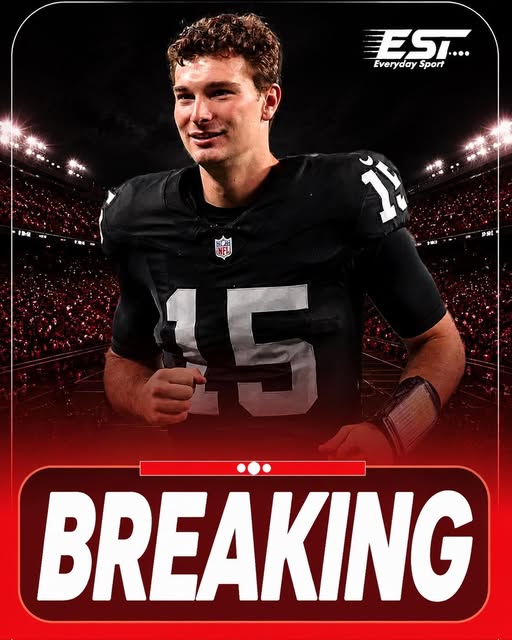
Mendoza completed 10 of 16 passes for 97 yards and a touchdown across four drives Thursday against the Arizona Cardinals, a statistically modest debut that nonetheless provided an encouraging first look at the No. 1 overall pick. The Raiders ultimately fell 27-14, but the result mattered considerably less than the evaluation taking place inside the organization.
For Mendoza, the performance was not enough.
The rookie was notably critical of his own outing afterward, emphasizing that there were plays he could have handled better and areas of his game that require improvement. That response may have been more revealing than the box score itself.
The Raiders did not draft Mendoza first overall because they expected him to be finished developing. They drafted him because they believe his combination of accuracy, processing ability, toughness and competitive temperament can eventually make him the centerpiece of a franchise that went 3-14 last season.
His first preseason test suggested that process is underway.
Mendoza entered the game after veteran Kirk Cousins, who is competing to remain the Raiders’ starting quarterback, opened the contest with an efficient touchdown drive. The contrast was intentional. Las Vegas has made it clear that Mendoza is not being handed the starting job simply because the organization invested the top pick in him.
Head coach Klint Kubiak has maintained that Cousins remains the favorite to open the regular season as QB1. But Mendoza’s performance could accelerate the conversation about how quickly the rookie should receive meaningful snaps.
Kubiak has already described Mendoza as an ascending player and indicated that the rookie is expected to receive more first-team repetitions as the preseason progresses.
That is significant.
For a rookie quarterback, preseason statistics can be misleading. Defensive game plans are vanilla, personnel combinations are constantly changing and many starters either do not play or see limited action. The more useful evaluation comes from how a quarterback operates within the structure of the offense: his pre-snap identification, footwork, timing, pocket management, progression discipline and ability to deliver accurately when the play breaks down.
Mendoza showed enough of those traits to keep the Raiders encouraged.
He completed 62.5% of his attempts, generated 6.1 yards per attempt and produced a touchdown without throwing an interception. He also absorbed a sack, underscoring one of the concerns that followed him into the draft.
Mendoza’s college résumé was considerably more spectacular.
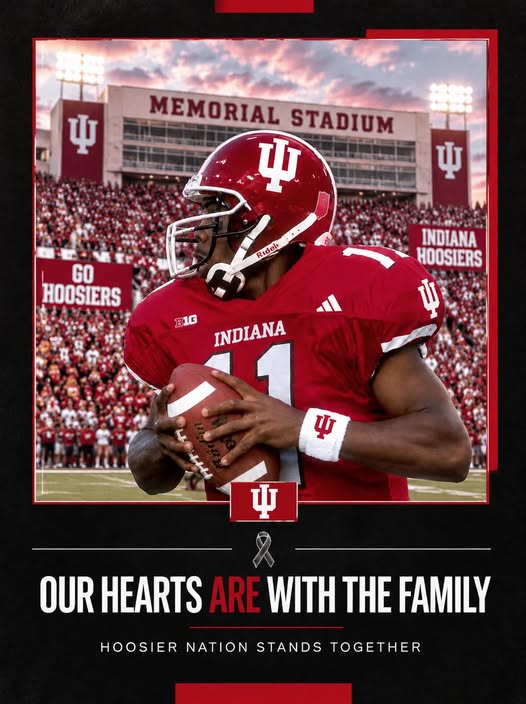
After transferring from California to Indiana, he produced one of the most accomplished quarterback seasons in recent college football history in 2025. He completed 72% of his passes for 3,535 yards, 41 touchdowns and six interceptions while leading Indiana to a perfect 16-0 season, its first national championship and Mendoza’s first Heisman Trophy. He also led the FBS in touchdown passes.
That production helped make him the second No. 1 overall pick in Raiders history, following JaMarcus Russell in 2007.
Mendoza’s statistical profile was particularly impressive because of how consistently he protected the football. Since 2024, he threw 39 touchdown passes without an interception in the red zone, according to Pro Football Focus data cited by NFL.com.
The NFL, however, presents a different challenge.
At Indiana, Mendoza operated extensively from an RPO-based system. Kubiak’s offense demands greater comfort under center and incorporates substantial play-action and movement concepts. NFL.com noted that Kubiak’s Seattle offense used under-center formations on 52.6% of its snaps last season, the second-highest rate in the league.
That transition will require time.
Mendoza’s accuracy and anticipation are considered among his biggest strengths. He consistently showed at Indiana that he could throw receivers open rather than simply waiting for separation. His ability to process coverage and deliver rhythm throws helped fuel an offense that rarely put itself behind schedule.
But the Raiders also know the limitations.
Mendoza can hold the football too long when searching for a downfield opportunity. His pocket mobility was questioned during the draft evaluation, and his willingness to absorb contact could become a problem if Las Vegas fails to protect him.
Those issues were never going to disappear after one preseason game.
What matters is whether Mendoza demonstrates improvement from one appearance to the next.
The financial commitment makes the evaluation even more consequential. Mendoza signed a four-year, fully guaranteed contract worth $57.27 million, including a fifth-year option available to the Raiders.
Because first-round contracts are governed largely by the NFL’s rookie wage scale, the Raiders did not have unlimited flexibility in structuring the deal. But the contract still represents a substantial investment in the player expected to become the franchise’s long-term answer at quarterback.
The financial structure also gives Las Vegas something it desperately needs after years of instability at the position: cost certainty.
A highly drafted quarterback performing at a high level on a rookie contract can give an organization significant roster-building flexibility. The Raiders can theoretically surround Mendoza with expensive veteran talent while his quarterback salary remains controlled by the rookie scale.
That makes his development more than a quarterback story. It is a roster-construction story.
The Raiders signed Cousins to a contract with $20 million guaranteed this offseason, giving them an experienced option while Mendoza develops.
That arrangement gives Kubiak an enviable problem.
If Cousins plays well, Las Vegas can resist the temptation to accelerate Mendoza’s timeline. If Cousins struggles, Mendoza has already demonstrated enough competence to make the coaching staff consider a change.
The preseason opener did not settle that debate.
It did, however, strengthen the argument that Mendoza belongs increasingly close to the center of it.
The rookie’s mentality may be just as important. Mendoza arrived in Las Vegas after a season in which virtually everything went right: an undefeated championship run, a Heisman Trophy and the No. 1 overall selection. The NFL has a way of stripping away that certainty quickly.
His willingness to critique himself after a solid statistical debut suggests he understands that.
The Raiders are not asking Mendoza to recreate Indiana immediately. They are asking him to learn how to operate an NFL offense, protect the football, recognize pressure, command the huddle and consistently put the offense in favorable situations.
Those are different challenges.
And they will become considerably more difficult once opposing defenses begin disguising coverages, changing pressure packages and attacking the rookie with NFL-caliber pass rushers.
For now, Mendoza has earned another opportunity.
The next test will be less about whether he can complete 10 of 16 passes and more about whether he can correct the mistakes that bothered him after doing so.
That distinction matters.
The Raiders’ investment in Mendoza was never based on one preseason box score. It was based on the belief that the 22-year-old quarterback possesses the tools and temperament to eventually lead a franchise that has spent years searching for stability at the position.
His debut did not prove that he is the answer.
It provided something more useful at this stage: evidence that the answer might be developing.
And Mendoza, judging by his own assessment, knows there is still plenty of work ahead.