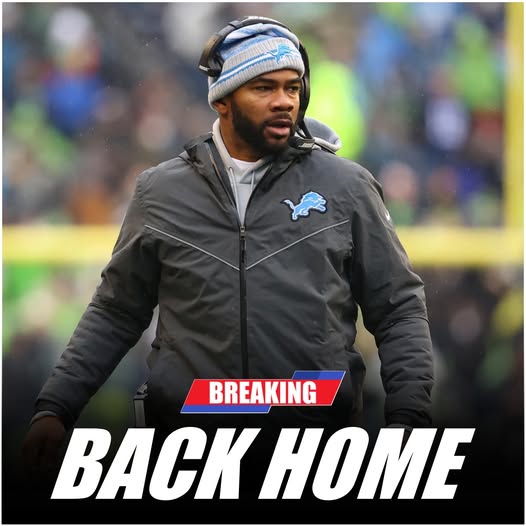
If Coleman were to return to the program in an official capacity, it would represent more than a nostalgic homecoming. It would connect one of the most productive players in Indiana history with a program that has undergone a remarkable transformation under coach Curt Cignetti.
Coleman’s name still resonates inside Memorial Stadium because of what he accomplished there before leaving for the NFL. In 2014, the running back produced a season that remains difficult to replicate: 2,036 rushing yards on 270 attempts, an astonishing 7.5 yards per carry and 15 touchdowns in 12 games. He also caught 25 passes for 141 yards.
That performance earned Coleman unanimous All-America honors and placed him seventh in the Heisman Trophy voting. He became only the third unanimous and consensus All-American in Indiana history at the time, joining Anthony Thompson and Vaughn Dunbar.
His most memorable afternoon came against Ohio State.
Coleman ripped through the Buckeyes for 228 yards on 27 carries, averaging 8.4 yards per attempt and scoring three touchdowns. His 90-yard touchdown run remains one of the signature individual plays in Indiana football history, while his 228 rushing yards represented an Ohio Stadium record at the time.
Against Rutgers, Coleman was even more spectacular, rushing for a career-high 307 yards on 32 attempts. He averaged 9.6 yards per carry and scored on a 67-yard run. Only Thompson’s 377-yard performance against Wisconsin in 1989 ranks higher for a single game in Indiana history.
Coleman’s 2014 season ultimately became the defining chapter of his college career. He finished his Indiana tenure with 3,219 rushing yards, 28 rushing touchdowns and a career average of 7.1 yards per carry.
That production made him an obvious NFL prospect. Coleman entered the 2015 NFL draft early and was selected by the Atlanta Falcons in the third round, 73rd overall.
His professional career eventually took him to San Francisco and New York, among other stops. He became part of the 49ers’ offense during their run to Super Bowl LIV and remained one of the more experienced running backs of his generation.
Now, at 33, Coleman is no longer the explosive three-down back who terrorized Big Ten defenses a decade ago. That distinction matters if the speculation surrounding a potential Indiana return is interpreted as a playing opportunity. His value to the Hoosiers would be far more naturally measured through mentorship, player development, recruiting relationships and institutional knowledge than through carries on Saturdays.
And that is precisely why the timing would make sense.
Indiana enters the 2026 season in a completely different place than the program Coleman left behind.
The Hoosiers are coming off a historic 16-0 campaign that culminated in the first national championship in program history. Cignetti’s team transformed Indiana from a program fighting for relevance into a legitimate national power, and the 2026 roster reflects that evolution.
Indiana currently lists 60 returning players, including 11 players who made multiple starts during the 2025 season. The roster also includes 44 newcomers, with 18 transfers.
That roster turnover creates a need for experienced voices who understand what it means to play at Indiana while also understanding the demands of professional football.
Coleman fits that description unusually well.
His presence would also carry symbolic significance at a moment when Indiana is attempting to establish a sustainable football identity rather than simply celebrate one championship season.
Cignetti has repeatedly emphasized that the 2025 championship belongs in the past. His challenge is to make Indiana competitive again with an entirely different roster, particularly after the departure of Heisman Trophy-winning quarterback Fernando Mendoza and several other key contributors.
The Hoosiers have responded aggressively.
Former TCU quarterback Josh Hoover arrived through the transfer portal after throwing for 3,472 yards and 29 touchdowns in 2025. He now assumes the difficult task of following Mendoza, the No. 1 overall selection in the NFL draft.
The running back room has also undergone a significant transition. Kaelon Black, who helped Indiana win its national championship, was selected by the San Francisco 49ers in the third round of the 2026 NFL draft. He became the highest-drafted Indiana running back since Coleman went 73rd overall to Atlanta in 2015.
That connection makes a potential Coleman presence even more intriguing.
Indiana is no longer simply trying to develop players who can compete in the Big Ten. The program is now producing NFL-caliber talent at a much higher rate. Indiana’s 2026 draft class included a program-best four selections in the first three rounds, a remarkable indication of how dramatically the talent pipeline has changed.
For younger running backs, receivers and offensive players, access to someone who rushed for more than 3,200 yards at Indiana before building an NFL career could be invaluable.
There is also a larger cultural component.
Memorial Stadium has become the centerpiece of Indiana’s football revival. The venue is sold out for the 2026 season, and IU Athletics has introduced new fan experiences, championship signage, pregame opportunities and expanded tailgating initiatives as the program attempts to build upon last season’s unprecedented momentum.
The symbolism of a former star walking back into that environment would be difficult to ignore.
This is no longer the Indiana program Coleman knew.
It is a program that now expects to compete for the Big Ten title, contend for the College Football Playoff and develop players capable of succeeding at the next level.
That changes the meaning of a potential reunion.
Coleman would not simply be returning to the place where he became famous. He would be returning to a program that has finally reached the competitive level that his individual brilliance once suggested was possible.
There are, however, important distinctions between legitimate reporting and fan speculation.
There is currently no confirmed contract, coaching appointment or official Indiana announcement establishing Coleman as a member of Cignetti’s staff. Consequently, any suggestion that he has already agreed to return should be treated cautiously until Indiana or Coleman confirms it.
There would also be no conventional NFL salary-cap implications if Coleman returned to Indiana in a non-playing role. His NFL playing contract status would be separate from Indiana’s college football operations. Any compensation connected to a university position would instead fall within the rules governing college athletics, employment and, where applicable, NIL-related arrangements.
The bigger question is whether Indiana wants to continue building institutional continuity around the stars who helped shape the program before its national breakthrough.
Coleman represents one of the clearest links between those eras.
Before Cignetti arrived, Indiana had produced outstanding individual players such as Thompson, Antwaan Randle El, Jordan Howard and Coleman, but sustained team success remained elusive. Cignetti has changed that equation.
Coleman’s return, should it eventually materialize, would therefore have significance beyond one former running back.
It would be another signal that Indiana understands the importance of its own football history while simultaneously building something new.
And for a fan base that has waited decades to experience this level of relevance, seeing Coleman back inside Memorial Stadium would provide a powerful reminder of how far the program has traveled.
The player who once turned Big Ten defenses into track meets helped establish the standard for individual excellence at Indiana.
Now the Hoosiers are trying to establish something much larger: a standard for sustained championship football.
If Coleman is indeed coming home, the reunion would be about much more than nostalgia.
It would be about connecting Indiana’s past to its most ambitious future.