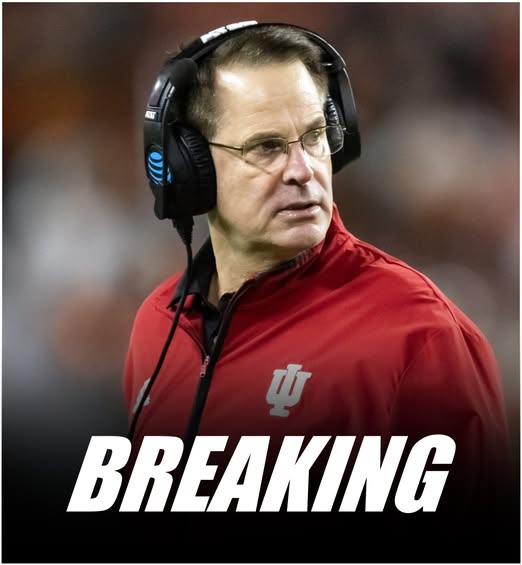
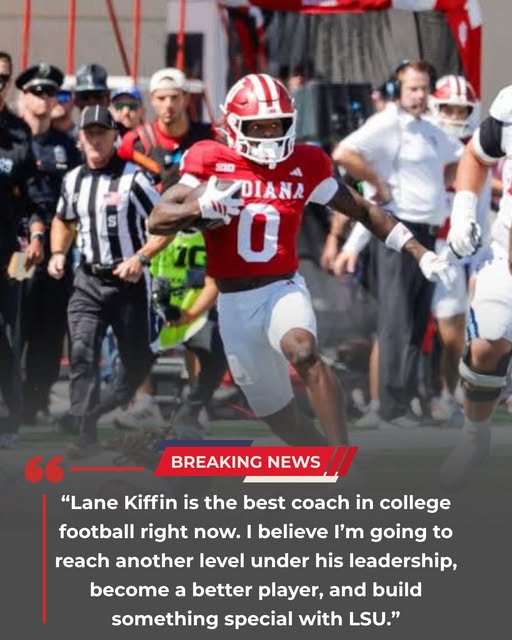
The phrase “reloading” often gets tossed around casually in college football circles, but in Bloomington, it carries a far more deliberate meaning this offseason. The Indiana Hoosiers are not simply patching holes or hoping for incremental growth—they are constructing something far more imposing, a roster and identity built to withstand the weekly grind of high-level competition. At the center of that transformation stands quarterback Josh Hoover, whose emergence has given Indiana both a stabilizing force and a ceiling-raising catalyst, while a defense trending toward dominance is quickly becoming the backbone of a program intent on shifting its trajectory.
For a team that has long battled for consistency in a conference defined by physicality and depth, Indiana’s current blueprint reflects a clear philosophical shift. The Hoosiers are leaning into complementary football, pairing an offense designed for efficiency and controlled explosiveness with a defense that thrives on disruption, discipline, and relentless pressure. It is not a reinvention so much as a recalibration—one that positions them to compete with greater resilience and far less reliance on outlier performances.
Hoover’s presence is central to that recalibration. The quarterback does not need to be a weekly headline machine to influence outcomes; his value lies in command, decision-making, and the ability to keep Indiana’s offense on schedule. In a system that emphasizes timing and ball distribution, Hoover’s composure under pressure has already begun to set a tone for the entire unit. Teammates have responded to his steadiness, and coaches have leaned into his strengths, building a scheme that maximizes his accuracy and situational awareness.
What separates Hoover from many young quarterbacks navigating similar expectations is not just his physical tools, but his grasp of tempo and control. Indiana’s offense is increasingly structured around sustaining drives, forcing defenses into uncomfortable situations, and capitalizing on mistakes rather than forcing low-percentage plays. Hoover’s willingness to take what is available—while still possessing the capability to stretch the field when necessary—gives the Hoosiers a level of balance that has often eluded them in recent seasons.
That balance is further reinforced by a supporting cast that, while not necessarily filled with household names, has been assembled with intention. The offensive line, often an overlooked component in rebuilding efforts, has been prioritized as a foundational piece. Depth, continuity, and physical development have become focal points, with the expectation that improved protection will not only benefit Hoover but also unlock a more consistent ground game. The running back rotation, meanwhile, offers versatility, with players capable of contributing both between the tackles and in the passing game.
Yet it is on the defensive side of the ball where Indiana’s ambitions are perhaps most clearly defined. The Hoosiers are not just aiming to improve—they are striving to impose. The language surrounding the unit has shifted from reactive to aggressive, from containing opponents to dictating terms. It is a subtle but significant distinction, one that reflects a growing confidence within the program.
Defensively, Indiana’s identity is being shaped by its front seven, a group that has embraced physicality as its calling card. The emphasis on winning at the line of scrimmage is evident in both scheme and personnel, with players being developed to excel in one-on-one matchups while also functioning cohesively within the broader structure. The result is a unit capable of generating pressure without excessive reliance on blitzing, allowing the secondary to operate with greater flexibility.
That secondary, in turn, has shown signs of becoming a strength in its own right. Improved communication and a deeper understanding of coverage responsibilities have reduced breakdowns, while an increased emphasis on ball skills has led to more turnovers and pass deflections. In a conference where explosive passing attacks can quickly alter the course of a game, Indiana’s ability to limit big plays while creating opportunities of its own could prove decisive.
The interplay between offense and defense is where the Hoosiers’ reloading effort truly comes into focus. A more controlled offensive approach reduces exposure for the defense, while a disruptive defensive unit creates shorter fields and additional possessions for the offense. It is a symbiotic relationship that, when functioning effectively, can elevate a team beyond the sum of its individual parts.
Coaching has played a pivotal role in orchestrating this transformation. The staff’s commitment to player development, scheme adaptability, and situational preparation has fostered an environment where growth is both expected and achievable. Rather than chasing quick fixes, Indiana has invested in building a sustainable model—one that prioritizes fundamentals while remaining flexible enough to adjust to evolving challenges.
Recruiting, too, reflects this long-term vision. The Hoosiers have targeted players who fit specific roles within their system, valuing versatility, work ethic, and football intelligence alongside raw athleticism. It is an approach that may not always generate immediate headlines but has the potential to yield more consistent results over time. By aligning recruiting priorities with schematic goals, Indiana is creating a clearer pathway for incoming players to contribute and develop.
Of course, the path forward is not without obstacles. The competitive landscape remains unforgiving, with established programs continuing to set a high bar. For Indiana, the challenge lies not only in matching that level but in sustaining it across an entire season. Depth, health, and the ability to respond to adversity will all play critical roles in determining how far this reloaded roster can go.
There is also the question of expectations. As the Hoosiers begin to show signs of progress, external perceptions will inevitably shift. What was once viewed as a rebuilding effort may soon be judged against a higher standard, bringing added pressure and scrutiny. How the team navigates that transition—particularly in close games and high-leverage situations—will be a telling indicator of its maturity.
Within the locker room, however, the focus remains internal. Players have emphasized accountability, consistency, and a commitment to incremental improvement. The message is clear: success will not be defined by isolated moments but by sustained execution over time. It is a mindset that aligns with the broader philosophy underpinning Indiana’s reloading effort.
Hoover’s leadership is especially critical in this regard. As the face of the offense, his approach sets the tone for those around him. By maintaining composure and emphasizing preparation, he reinforces the team’s collective identity. His ability to connect with teammates, communicate effectively, and remain steady in the face of pressure adds an intangible element that cannot be easily quantified but is nonetheless essential.
On the defensive side, leadership is more distributed, with multiple players stepping into roles that demand both performance and accountability. This shared responsibility fosters a sense of unity, ensuring that the unit operates as a cohesive whole rather than a collection of individuals. It also creates resilience, as the defense is less reliant on any single player to drive its success.
As the season approaches, the anticipation surrounding Indiana’s reloaded roster continues to build. There is a sense that the pieces are in place for something meaningful, even if the full extent of that potential remains to be seen. The combination of a poised quarterback, a disciplined offense, and a defense trending toward dominance offers a compelling foundation—one that could redefine expectations for the program.
Ultimately, the true measure of Indiana’s progress will be found not in preseason projections or isolated highlights but in its ability to execute consistently against quality opposition. The Hoosiers have taken significant steps toward building a more complete team, one capable of competing on multiple fronts. Whether that translates into tangible success will depend on their capacity to maintain focus, adapt to challenges, and deliver when it matters most.
What is clear, however, is that Indiana is no longer content with incremental gains. The reloading process underway in Bloomington is ambitious, calculated, and rooted in a desire to establish a new standard. With Josh Hoover guiding the offense and a defense intent on asserting its dominance, the Indiana Hoosiers are building something that demands attention—a team not just looking to compete, but to contend.